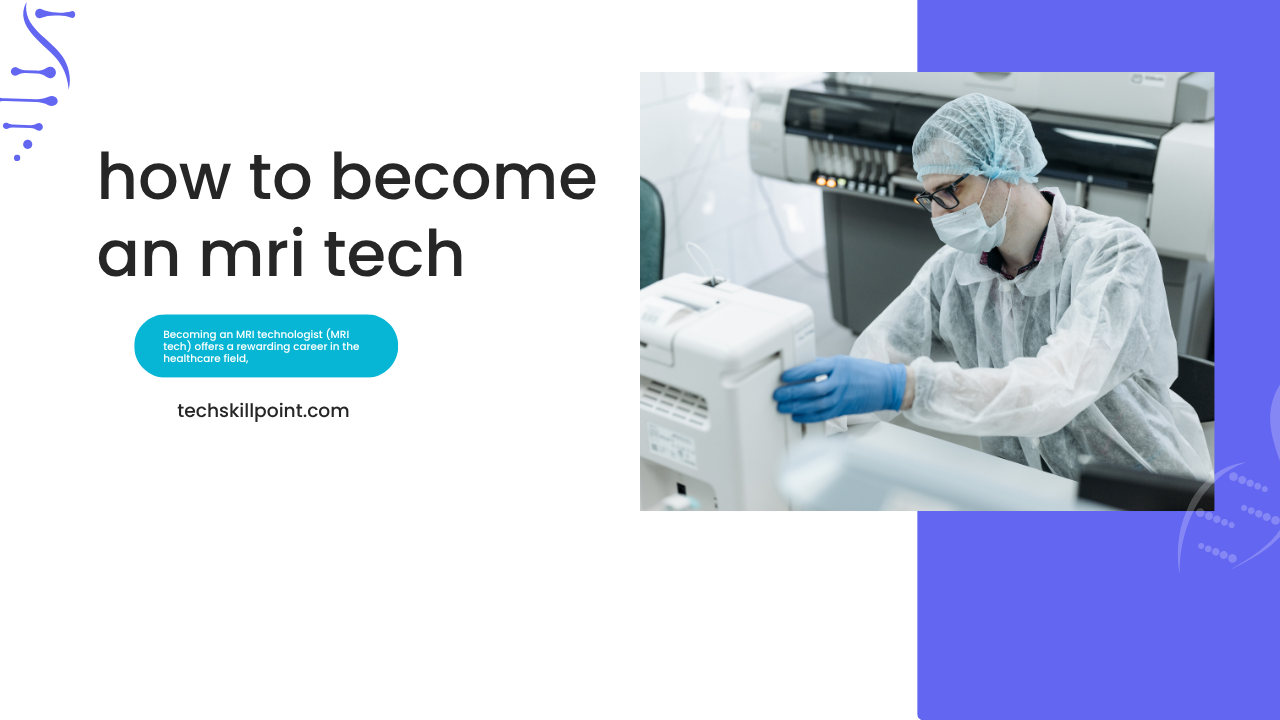
Becoming an MRI technologist (MRI tech) offers a rewarding career in the healthcare field, allowing you to work with cutting-edge medical technology while helping diagnose and treat patients. An MRI (Magnetic Resonance Imaging) technologist operates MRI machines that provide detailed images of the inside of the human body. These images are crucial for diagnosing a wide range of conditions, including brain injuries, tumors, and joint problems. In this guide, we’ll walk you through the steps, required education, certifications, and skills to become an MRI tech.
What Is an MRI Tech?
An MRI technologist is a healthcare professional who specializes in operating MRI scanners to capture detailed images of the body. Unlike traditional X-ray machines, MRIs use strong magnetic fields and radio waves to create highly detailed images of soft tissues, organs, and bones. MRI technologists are responsible for preparing patients, operating the MRI equipment, and ensuring high-quality diagnostic images are obtained. They work in hospitals, medical clinics, outpatient facilities, and imaging centers.
Pathways to Becoming an MRI Tech
There are several pathways to becoming an MRI technologist. You can follow a traditional route through radiology and specialize in MRI, or you can directly enter a specialized MRI program. Here are the most common pathways:
Pathway 1: Radiologic Technologist (X-Ray) First (Recommended)
The most common and recommended pathway to becoming an MRI tech involves first becoming a radiologic technologist (X-ray tech) and then specializing in MRI. This route typically provides the best job security and career growth opportunities.
Step 1: Complete a 2-Year Associate Degree in Radiography
The first step in this pathway is to complete a 2-year associate degree in radiologic technology (or radiography). This program provides a foundation in basic imaging techniques, including how to take X-rays, understand anatomy, and practice safety protocols. During this time, you will also learn essential skills such as:
- Understanding human anatomy
- Operating imaging equipment
- Positioning patients for X-ray imaging
- Ensuring patient safety and comfort during procedures
Step 2: Get Hired and Cross-Train in MRI
Once you’ve completed your radiologic technology degree and gained some work experience, the next step is to specialize in MRI. Many MRI techs start out working as X-ray technologists and receive on-the-job training in MRI. Hospitals and imaging centers often provide cross-training in MRI for existing staff members. This allows you to learn MRI-specific procedures while working in the field.
Step 3: Pass the ARRT MRI Exam
After gaining hands-on experience, you’ll need to pass the ARRT MRI exam (American Registry of Radiologic Technologists). The ARRT exam is required to become certified in MRI, and it is essential for most employers. The exam assesses your knowledge and competency in MRI technology, including safety protocols, patient care, and imaging procedures.
Pathway 2: Specialized MRI Program
Another pathway to becoming an MRI tech is enrolling in a specialized MRI program. This is ideal for individuals who want to focus exclusively on MRI technology without first becoming an X-ray tech.
Step 1: Enroll in a Dedicated MRI Program
You can enroll in a 2-year Associate degree or Bachelor’s degree in MRI technology. These programs provide in-depth knowledge of MRI imaging, including how to operate MRI machines, interpret images, and understand safety protocols. Some programs may offer both classroom instruction and clinical training, ensuring that you get hands-on experience with MRI equipment.
Step 2: Complete Clinical Internships
As part of your MRI program, you will need to complete clinical internships. These internships provide practical experience in real-world healthcare settings, such as hospitals or imaging centers. Typically, you’ll need to complete around 750-1,000 hours of clinical training to graduate and gain the skills necessary to pass certification exams.
Step 3: Get Certified
After completing the program, you will need to pass the ARRT MRI exam or the ARMRIT exam (American Registry of Magnetic Resonance Imaging Technologists) to become certified in MRI technology. Certification is required by most employers and ensures that you have the technical knowledge to operate MRI machines safely and effectively.
Pathway 3: Certificate Program (For Existing Healthcare Workers)
If you already have a healthcare background, such as a nursing degree or a radiologic technology (RT) certification, you can pursue an MRI certificate program. These programs are typically shorter, ranging from 12 to 18 months, and are designed for individuals who want to specialize in MRI without going through a full degree program.
Step 1: Enroll in a Certificate Program
Certificate programs are offered by colleges and medical institutions and are tailored to those with prior healthcare experience. These programs offer intensive, focused training in MRI technology, ensuring you acquire the skills needed to pass certification exams and succeed in the field.
Step 2: Complete Clinical Training
Like other MRI programs, certificate programs include clinical training, where you gain hands-on experience working with MRI equipment. You’ll work under the supervision of experienced MRI technologists and learn the essential skills required to perform MRI procedures safely.
Step 3: Get Certified
After completing the certificate program, you will need to pass the ARRT MRI exam or the ARMRIT certification to become officially certified as an MRI technologist. Certification is essential to working as an MRI tech and is required by most employers.
Essential Steps to Becoming an MRI Tech
No matter which pathway you choose, becoming an MRI tech involves several essential steps:
1. Meet Prerequisites
Before enrolling in any MRI program, you need to meet certain prerequisites, including:
- A high school diploma or GED
- Strong background in science and math, especially anatomy, physics, and algebra
- Some programs may require prior experience in healthcare or radiology
2. Complete Accredited Education
It’s important to attend an accredited program to ensure that your education meets industry standards. Programs accredited by the Joint Review Committee on Education in Radiologic Technology (JRCERT) or recognized by the ARRT will prepare you for the certification exam and provide you with a solid foundation in MRI technology.
3. Complete Clinical Training
Clinical training is essential to becoming proficient in MRI technology. You’ll need to complete between 750 and 1,000 hours of hands-on clinical experience, working directly with patients and MRI machines. This practical training will help you develop the technical skills necessary to perform MRIs safely and effectively.
4. Get Certified
After completing your education and clinical training, you will need to pass either the ARRT MRI exam or the ARMRIT exam to become certified. Certification demonstrates that you have the knowledge and skills required to work as an MRI technologist and is required by most employers.
5. State Licensure
Some states require MRI technologists to hold a state license in addition to national certification. Make sure to check with your state’s regulatory board to determine if licensure is required. Typically, you’ll need to provide proof of certification and education to obtain your state license.
Required Skills and Traits of an MRI Tech
To succeed as an MRI technologist, certain skills and traits are essential:
1. Technical Skills
MRI technologists must have a strong understanding of MRI technology and its operation. This includes:
- Familiarity with MRI machines and how to operate them
- Knowledge of MRI safety protocols and how to prevent patient injury
- The ability to understand anatomy and how it relates to imaging
- Proficiency in image processing and ensuring high-quality MRI scans
2. Patient Care Skills
MRI technologists often work directly with patients, which means excellent patient care skills are a must. These skills include:
- Comforting patients who may feel anxious or claustrophobic in the MRI machine
- Explaining the procedure and ensuring patients understand what to expect
- Monitoring patients’ vital signs during the procedure
3. Attention to Detail
Since MRIs are used for diagnostic purposes, it is essential to capture clear, high-quality images. An MRI tech must be detail-oriented to ensure that the images are accurate and of diagnostic value.
4. Problem-Solving Abilities
MRI techs often encounter technical challenges during procedures. Being able to quickly identify and troubleshoot issues is an essential skill for maintaining the flow of the procedure and ensuring that the patient is comfortable and safe.
5. Physical Stamina
MRI technologists may spend long hours standing or positioning patients, making physical stamina a key requirement for success in this field. Techs must be able to lift and position patients, as well as maneuver heavy equipment.
Conclusion: A Rewarding Career as an MRI Tech
Becoming an MRI technologist is a rewarding career path that offers job stability, a competitive salary, and the opportunity to work in the healthcare industry. Whether you pursue an associate degree in radiology and cross-train in MRI or enter a specialized MRI program, the journey to becoming an MRI tech involves dedication, education, and hands-on experience.
In 2026 and beyond, the demand for skilled MRI technologists is expected to remain high, driven by the continued importance of MRI in diagnostic medicine. With the right education, training, and certification, you can pursue a successful career as an MRI technologist and play a vital role in helping healthcare providers deliver accurate diagnoses and improve patient outcomes.
FAQs About Becoming an MRI Tech
What is the best pathway to becoming an MRI tech?
The best pathway often involves becoming a radiologic technologist (X-ray tech) first and then cross-training in MRI. This provides the most job security and experience before specializing in MRI.
How long does it take to become an MRI tech?
Becoming an MRI technologist typically takes 2–4 years, depending on the path you choose (e.g., associate degree, certificate program, or specialized MRI program).
Is certification required to work as an MRI tech?
Yes, certification from either the ARRT or ARMRIT is required for most employers. Certification demonstrates that you have the necessary skills and knowledge to safely operate MRI equipment.
What skills do I need to succeed as an MRI tech?
Key skills include technical proficiency, patient care, attention to detail, problem-solving abilities, and physical stamina.
Are there state licensing requirements for MRI technologists?
Some states require state licensure in addition to national certification. Be sure to check with your state’s regulatory board to understand specific requirements.
What is the salary of an MRI tech?
MRI technologists earn competitive salaries, with the average salary ranging from $60,000 to $90,000 per year, depending on experience and location.